

Our homes are constantly exposed to an invisible electromagnetic environment. Electrical wiring, household appliances, Wi-Fi networks, mobile phones and communication antennas generate electromagnetic fields that surround us throughout our daily lives, often without us being aware of their presence. Yet these fields are not simply invisible signals passing through our surroundings. Electromagnetic fields can interact with the human body, and certain exposure conditions are known to produce biological effects. As we spend a significant part of our lives indoors, understanding the electromagnetic conditions of our homes becomes an important aspect of evaluating our living environment. But how can we assess something we cannot see or feel?
This is where electromagnetic measurements become essential. Using specialized instruments, we can identify sources, quantify exposure levels and reveal differences between rooms that would otherwise remain unnoticed. However, the real value of a measurement lies not only in the number displayed on an instrument, but in understanding what that number represents, how it compares with relevant reference values and what practical improvements may be possible. Measuring our electromagnetic environment is the first step towards understanding our exposure and making informed choices about the spaces in which we live.
|
What we cannot see can often be measured. But what we measure must also be understood. |
1. Understanding What We Measure
Electromagnetic fields are not a single phenomenon. They encompass different physical processes that vary according to their frequency, source and interaction with the surrounding environment. In residential buildings, electromagnetic assessments generally distinguish between low-frequency electric fields, low-frequency magnetic fields and high-frequency electromagnetic fields.
Low-frequency electric fields are associated with electrical voltage. In European homes, they are commonly generated by installations operating at 50 Hz. They can exist around energized wiring even when an appliance is not actively consuming electricity. Their intensity is expressed in volts per metre (V/m).
Low-frequency magnetic fields are primarily generated by electrical currents. They can originate from power cables, distribution panels, transformers and operating appliances. Their intensity is commonly measured in nanoteslas (nT) or microteslas (µT).
High-frequency electromagnetic fields, also known as radiofrequency fields, are associated with wireless communication systems such as Wi-Fi, mobile phones, Bluetooth devices and mobile networks. Depending on the measurement method, they may be expressed in volts per metre (V/m) or microwatts per square metre (µW/m²).
These different quantities cannot be interpreted as though they represented the same physical phenomenon. An electromagnetic assessment may also examine additional electrical characteristics, such as body voltage or disturbances associated with electronic equipment and power-line communication systems. Such measurements require specific procedures and careful interpretation. For example, body voltage describes an electrical potential measured under defined conditions; it does not directly represent electromagnetic energy absorbed by the body. The choice of measuring instrument is therefore essential. A meaningful assessment begins by identifying the phenomenon being investigated and selecting the appropriate measurement technique. The objective is not simply to detect electromagnetic fields, but to characterize them accurately within the environment being examined.

 |
Key Insights Electromagnetic measurements describe different physical phenomena. Electric fields, magnetic fields and radiofrequency emissions require specific instruments, units and interpretation methods. Understanding what is being measured is the first step towards understanding the electromagnetic environment of a building. |
2. Interpreting Measurements Within the Living Environment
A measurement only becomes meaningful when it is placed in context. Two rooms within the same house may present very different electromagnetic conditions, even when their electrical equipment appears similar. The position of wiring, nearby appliances, electrical installations in adjacent rooms, wireless transmitters and external infrastructure can all influence the results. Measurements may also change according to the time of day, the operation of equipment and the activity of wireless communication systems. For this reason, a single reading cannot necessarily represent the overall electromagnetic environment of a building. A structured assessment examines several locations and, when appropriate, compares measurements under different operating conditions. For example, measurements taken near a bed may differ from those obtained in the centre of the room. Switching off a particular appliance may reveal whether it contributes significantly to the measured field. Such observations make it possible to distinguish between sources that are visually obvious and those that might otherwise remain unnoticed.
Understanding Reference Values Through Building Biology
Measuring electromagnetic fields is only the first step. The real value of an assessment lies in understanding what these measurements reveal about the quality of our living environment. Building Biology (Bau Biology) takes a particularly attentive approach to electromagnetic exposure within homes, especially in bedrooms and other spaces where we spend extended periods of time. Rather than focusing exclusively on high exposure levels, Building Biology uses precautionary reference values designed to identify and minimize potentially avoidable environmental influences. These reference values distinguish between different levels of exposure, ranging from no concern to slight, strong and extreme concern, depending on the type of electromagnetic field being measured. This approach is particularly relevant in sleeping areas, where the body spends several consecutive hours resting and recovering. A professional electromagnetic assessment compares measured values with these Building Biology references to identify areas that may benefit from further investigation or practical improvements. The objective is not simply to determine whether a measurement falls within a permissible limit. It is to understand the electromagnetic characteristics of the home and explore opportunities to create a more carefully optimized indoor environment.
Why These Measurements Matter for Our Well-Being
Our bodies continuously interact with the physical environment around us. Electromagnetic fields are one of the many environmental factors that deserve attention when assessing the spaces in which we live. Scientific research has demonstrated that electromagnetic fields can interact with biological tissues under certain exposure conditions. Researchers continue to investigate other potential effects, including those associated with prolonged exposure. Building Biology adopts a precautionary perspective by seeking to identify and reduce avoidable electromagnetic exposure, particularly in areas dedicated to sleep and recovery. By identifying sources, measuring their intensity and comparing results with Building Biology reference values, we can develop a clearer picture of the electromagnetic conditions within a home. These findings provide a practical foundation for targeted recommendations, whether through equipment relocation, adjustments to electrical installations or other technically appropriate measures.
The purpose of electromagnetic evaluation is not merely to record numbers, but to use those measurements to better understand and improve the environment in which we live.
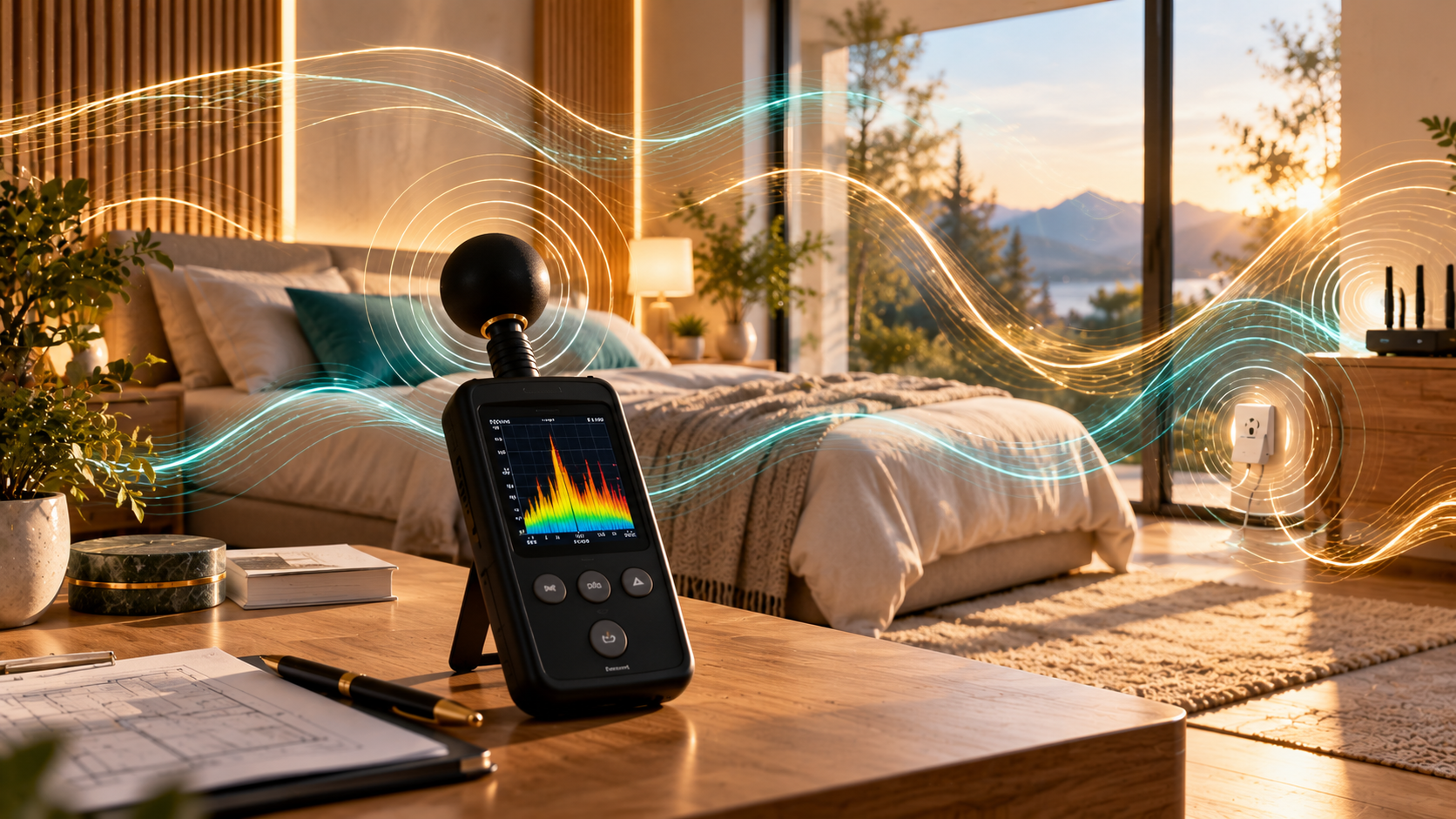
 |
Key Insights A measurement must always be interpreted in relation to its location, frequency, source and operating conditions. Regulatory exposure limits and precautionary reference values serve different purposes. Measuring an electromagnetic field provides information about exposure, but does not by itself establish a health effect. |
3. Turning Measurements Into Practical Improvements
The true value of an electromagnetic assessment lies not only in identifying exposure levels, but also in understanding what can reasonably be improved. Once the principal sources have been identified, measurements can help determine whether simple adjustments or more substantial technical modifications would be useful. For example, relocating an electrical appliance, increasing the distance between a wireless transmitter and a frequently occupied area, or modifying the arrangement of certain electrical equipment may reduce measured exposure. The effectiveness of such changes should ideally be verified through comparable measurements taken before and after the intervention. This approach makes it possible to distinguish between improvements that produce measurable results and solutions whose effectiveness has not been demonstrated.
Paying Attention to Frequently Occupied Spaces
Bedrooms, living rooms and workspaces are particularly relevant during residential electromagnetic assessments because people may spend extended periods of time in these locations. Bedrooms often receive special attention due to the duration of nighttime occupancy. Electrical wiring near a headboard, bedside equipment, charging devices, wireless transmitters and installations in adjacent rooms can all contribute to the local electromagnetic environment. Identifying these sources does not mean that they necessarily represent a health risk. Rather, it provides an opportunity to understand the physical conditions of the space and determine whether practical adjustments are appropriate.
A Structured Environmental Assessment
At GEOBIO Community, electromagnetic evaluation is approached as part of a broader understanding of the living environment. Different measurement techniques are used to investigate low-frequency electric and magnetic fields, radiofrequency exposure and, where relevant, additional electrical characteristics. The findings can be documented room by room, allowing measured values to be considered in relation to the building's layout and the way each space is used. Recommendations are then developed according to the identified sources, technical possibilities and practical needs of the occupants. Where appropriate, before-and-after measurements provide an objective means of assessing the results of an intervention. This process is not about eliminating all electromagnetic fields from modern living spaces. It is about understanding their presence, identifying avoidable sources of exposure and making informed decisions without unnecessary concern. An electromagnetic evaluation is most useful when it transforms invisible physical phenomena into understandable information and practical recommendations.

 |
Key Insights Electromagnetic measurements can help identify relevant sources and guide practical improvements within a building. Comparing results before and after an intervention allows changes in exposure to be verified objectively. The goal is not to eliminate modern technology, but to better understand and optimize the living environment. |
Conclusion
Electromagnetic measurements provide a valuable way to investigate an invisible dimension of our living environment. They make it possible to identify sources, quantify physical fields, compare different locations and evaluate the effectiveness of practical improvements. Yet the significance of a measurement cannot be reduced to a number alone. Its interpretation requires an understanding of the physical phenomenon being measured, the characteristics of the instrument, the measurement conditions and the reference framework used for comparison. A comprehensive assessment therefore combines objective measurements with careful observation, technical knowledge and an understanding of how the building is used. Rather than approaching electromagnetic fields through assumptions or fear, a measured and informed approach allows us to understand their presence and make proportionate decisions.
Understanding our living environment begins with reliable measurements — and with knowing what those measurements really mean.
About the Author
 |
David Georgiu is an environmental consultant specialising in geobiology and indoor electromagnetic assessments. Through GEOBIO Community, he helps homeowners and professionals better understand their living environments using a structured approach that combines scientific measurements, environmental observation and practical recommendations. His mission is to make environmental assessment accessible, educational and understandable for everyone. |
Would you like to better understand your home environment?
Discover our environmental assessment services and learn how a comprehensive evaluation can help you better understand the conditions within your home.