

A home is much more than a building. It is the place where we rest, recover, spend time with our families and create the foundations of our everyday lives.
When building, buying or renovating a property, our attention naturally turns towards architecture, location, energy efficiency, materials and interior design.
Yet one important dimension is frequently overlooked: the environmental conditions of the land and the building itself.
Beneath the surface, geological characteristics, groundwater circulation and natural ground emissions form part of the physical environment of a property. Above ground, electrical installations, electromagnetic fields, ventilation, building materials and surrounding infrastructure contribute to the conditions within our homes. Some of these factors are immediately visible. Others require specific measurements, observations or technical investigations to be properly understood. Geobiology and Building Biology offer complementary perspectives for examining these environmental characteristics and considering how they may influence the design and use of our living spaces. Understanding a property's environment before making major decisions can reveal opportunities that might otherwise remain unnoticed.
|
Whether you are selecting a building plot, visiting a potential new home or planning a renovation, the right environmental assessment at the right moment can make a meaningful difference. |
1. Before Building - Understanding the Land
Building a home begins long before the foundations are laid. The choice of land determines not only the location and orientation of a future house, but also its relationship with the surrounding natural environment. Two plots that appear almost identical may have very different geological, hydrological and environmental characteristics. Understanding these differences before construction can help architects, builders and future homeowners make more informed decisions.
Looking Beneath the Surface
The ground beneath a property is composed of geological formations that may contain fractures, variations in soil composition and underground water circulation. These characteristics are important for several reasons. Soil stability, drainage, groundwater levels and the presence of certain geological formations can influence construction methods, moisture conditions and the long-term performance of a building. In some regions, geological conditions may also contribute to the presence of radon, a naturally occurring radioactive gas that can accumulate inside buildings. Radon 222 deserves particular attention because prolonged exposure to elevated indoor concentrations is an established health risk. A comprehensive environmental approach therefore considers both the visible characteristics of a plot and the conditions that may exist beneath it.
The Geobiological Perspective
Geobiology examines the relationship between a location, its natural environment and the spaces occupied by people. Within traditional geobiological practice, particular attention may be given to underground watercourses, geological faults and proposed terrestrial networks. These elements form part of geobiological investigation, although their interpretation should be distinguished from geological or physical measurements supported by established scientific methods. A structured assessment can combine observations of the terrain with available geological information, environmental measurements and a study of the future building's layout. This broader perspective can help identify aspects of a site that deserve further investigation before construction begins.
Anticipating the Electromagnetic Environment
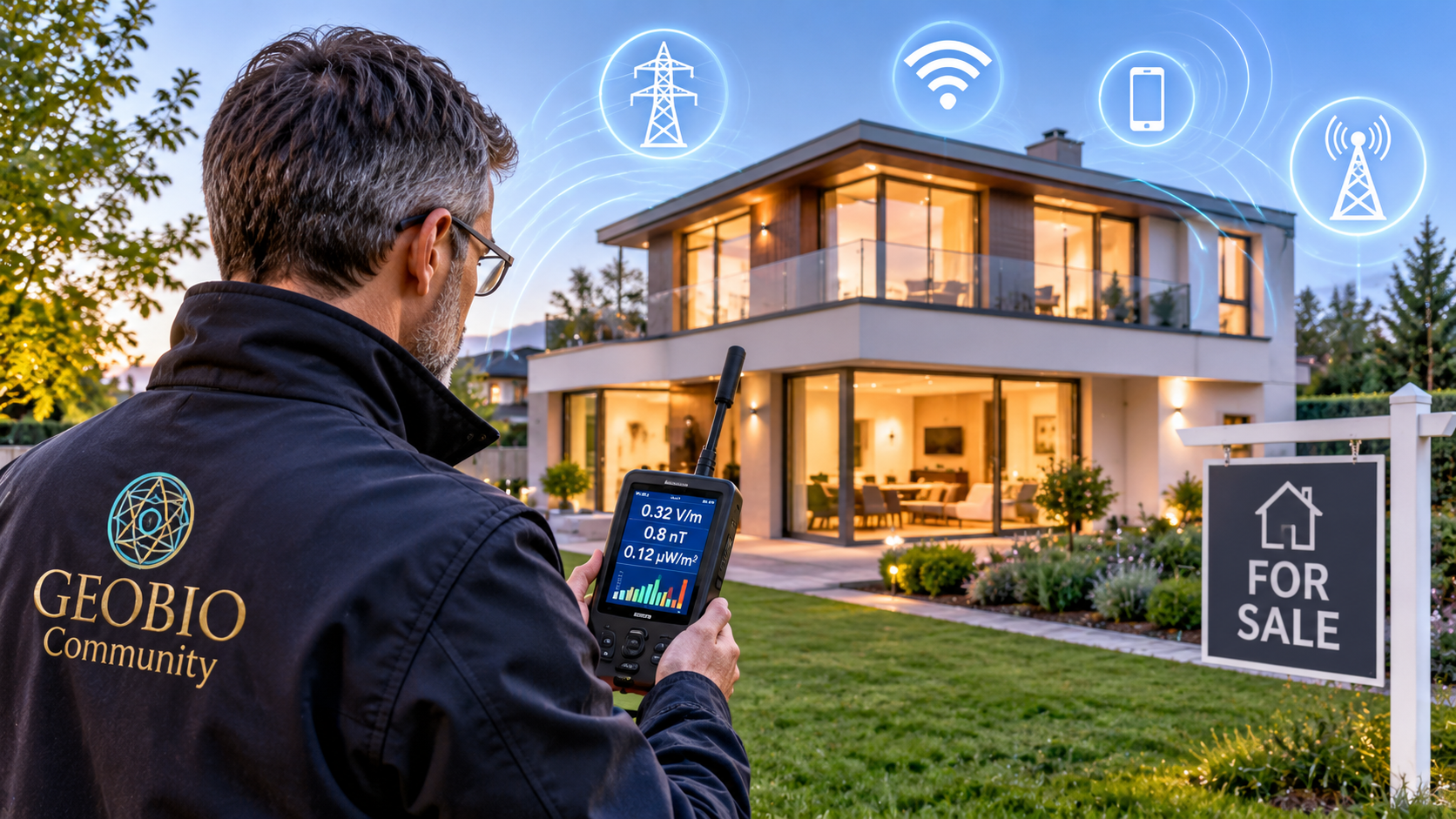
A building plot is also influenced by its surrounding electrical and communication infrastructure. High-voltage power lines, electrical substations, nearby distribution networks and wireless communication transmitters may contribute to the electromagnetic environment. Evaluating these conditions before construction allows the future positioning of bedrooms, living spaces and technical installations to be considered at an early stage. Electrical planning can also incorporate Building Biology principles, particularly in spaces intended for prolonged occupancy. It is generally easier to consider these aspects during the design phase than to modify completed installations afterwards.
The earlier the environmental characteristics of a site are understood, the greater the opportunity to integrate them into a thoughtful architectural project.
 |
Key Insights A building plot should be evaluated beyond its appearance, orientation and construction potential. Geological characteristics, groundwater conditions, radon potential and surrounding electromagnetic sources may all deserve attention. Combining relevant technical investigations with a geobiological perspective allows environmental considerations to be integrated before construction begins. |
2. Before Buying - Looking Beyond the Visible
Buying a home is one of the most significant investments many people will make during their lifetime. During a property visit, we naturally focus on the layout, natural light, general condition, location and overall atmosphere. We may also examine the energy performance certificate, insulation, heating system and potential renovation costs. But what about the environmental characteristics that cannot be identified during a conventional viewing? A beautifully renovated home can still contain electrical installations, environmental exposure sources or indoor conditions that deserve closer examination. Understanding these factors before purchasing provides an additional perspective on the property.
Investigating the Indoor Environment
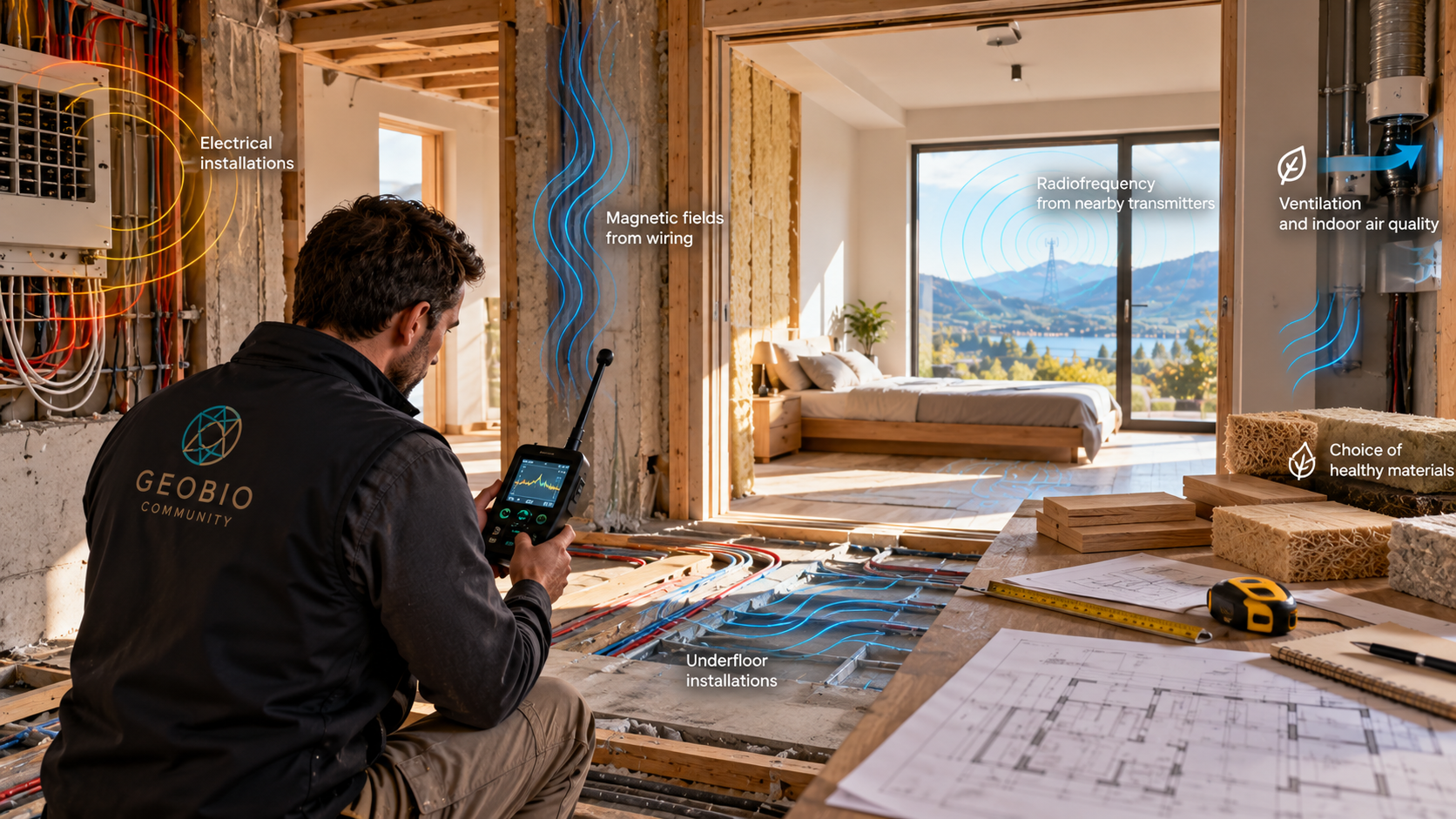
Every building has its own environmental characteristics. The age of the electrical installation, the arrangement of wiring, the location of technical equipment and the presence of wireless transmitters can influence electromagnetic measurements. Low-frequency electric and magnetic fields may originate from electrical circuits, distribution boards, appliances or nearby infrastructure. High-frequency electromagnetic fields may come from Wi-Fi systems, mobile communication networks and other wireless technologies. These sources are not necessarily apparent during a property visit. An electromagnetic evaluation makes it possible to identify relevant sources, measure field levels and understand how exposure varies between different rooms. Building Biology provides precautionary reference values that can be used to assess indoor electromagnetic conditions, with particular attention to sleeping areas. The objective is to understand the existing environment and identify practical opportunities for reducing avoidable exposure.
Understanding the Building as a Whole
Electromagnetic fields are only one aspect of a property's indoor environment. Ventilation, humidity, moisture damage, indoor air quality and building materials also influence the conditions in which occupants live. Poor ventilation can contribute to the accumulation of indoor pollutants, while persistent moisture problems may encourage mould growth. Radon 222 concentrations may also vary considerably between properties, even within the same geographical area. These issues require appropriate inspection and measurement methods. A geobiological and environmental assessment can therefore complement, rather than replace, the conventional technical inspections carried out before a property purchase.
Making Decisions With Better Information
Discovering an environmental issue after moving into a property may lead to unexpected work or additional expenses. By investigating relevant conditions beforehand, buyers can better understand what may require attention. In some cases, improvements may be relatively straightforward, such as relocating electrical equipment or changing the positioning of a frequently occupied space. Other situations may require modifications to electrical installations, ventilation systems or building components. The purpose of an assessment is not to discourage a purchase, but to provide information that helps buyers make decisions with greater confidence.
A home should be evaluated not only for what we can see, but also for the environmental conditions in which we will live every day.
 |
Key Insights A property visit reveals only part of a home's environmental characteristics. Electromagnetic measurements, radon testing, moisture investigations and indoor environmental observations can provide valuable additional information. Before purchasing, understanding these conditions can help identify potential improvements and support a more informed investment decision. |
3. Before Renovating - Creating a Better Living Environment
Renovation is often approached as an opportunity to improve comfort, appearance and energy efficiency. New insulation, modern heating systems, updated electrical installations and redesigned interiors can significantly transform a property. But renovation also offers something equally important: the opportunity to reconsider the environmental quality of the spaces we occupy. Once walls, floors and ceilings are opened, certain technical modifications become considerably easier to implement. This makes the planning stage particularly valuable.
Integrating Building Biology Into Renovation
Building Biology encourages a comprehensive approach to the indoor environment. Its principles consider electromagnetic exposure, indoor air quality, moisture management, ventilation, material selection and the relationship between the building and its occupants. When renovating, these considerations can be incorporated into architectural and technical decisions. For example, electrical circuits can be planned with attention to the location of beds, workstations and frequently occupied areas. Electrical distribution boards and technical equipment can be positioned with consideration for adjacent rooms. Wireless communication equipment can be located thoughtfully, while wired connections may be considered where practical. Measurements can help identify existing electromagnetic sources and verify whether proposed modifications produce measurable improvements.
Paying Special Attention to Bedrooms
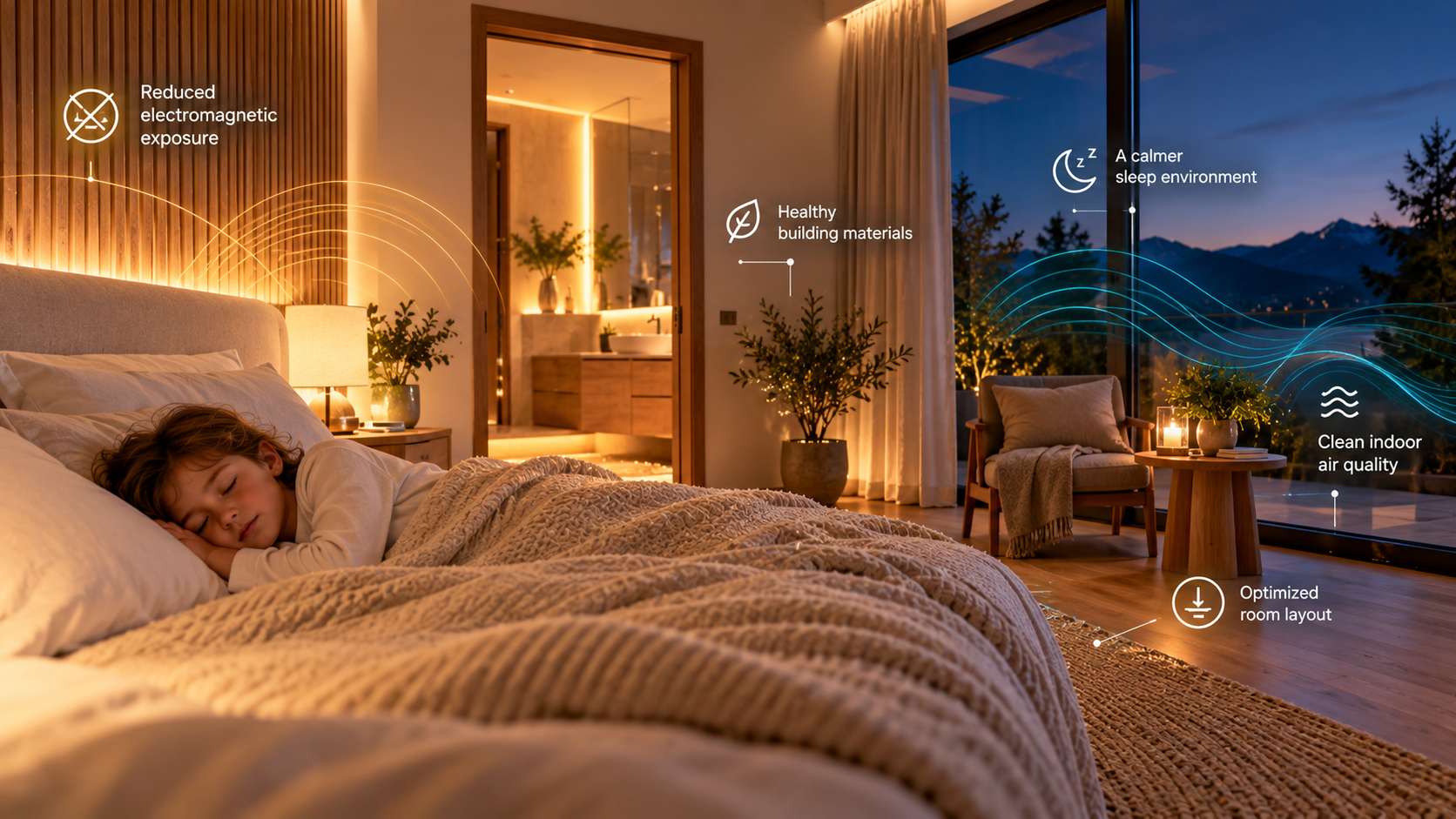
Bedrooms deserve particular attention because we spend many consecutive hours in these spaces. The position of a bed in relation to electrical wiring, nearby appliances, distribution equipment and wireless transmitters may influence the electromagnetic conditions around the sleeping area. Building Biology places particular emphasis on minimizing avoidable exposure in sleeping environments. A renovation provides the opportunity to reconsider room layouts, electrical installations and equipment placement before the final interior finishes are completed. At the same time, adequate ventilation, moisture control, comfortable temperatures and appropriate materials remain essential elements of a well-designed bedroom. A balanced environmental approach considers these factors together rather than treating them as isolated issues.
Measuring Before and After
One of the most valuable aspects of a structured environmental assessment is the ability to compare conditions before and after renovation. Initial measurements establish a reference point. Once modifications have been completed, new measurements can help determine whether the intended improvements have been achieved. This is particularly useful when evaluating changes to electrical installations or the positioning of equipment. The results can be documented room by room, creating a clearer understanding of the building's electromagnetic characteristics.
At GEOBIO Community, this approach forms part of a broader evaluation of the living environment, combining environmental observations, relevant measurements and practical recommendations. The aim is not to create a home completely isolated from modern technology or natural environmental influences. It is to make thoughtful choices, reduce avoidable exposures where practical and design spaces that respond more carefully to the needs of their occupants.
Renovating with environmental awareness means looking beyond the visible transformation and considering the conditions that will shape everyday life for years to come.
 |
Key Insights Renovation provides an ideal opportunity to integrate Building Biology principles into a home's design. Electrical installations, bedroom layouts, ventilation and material selection can all be considered before work is completed. Environmental measurements taken before and after renovation help verify improvements and support a more carefully planned living environment. |
Conclusion
Building, buying or renovating a home involves decisions that can influence our daily lives for many years. Architecture, location, comfort and energy efficiency are essential considerations, but they represent only part of the overall picture. The geological characteristics of a site, electromagnetic conditions, indoor air quality, moisture levels and other environmental factors also deserve attention. Geobiology and Building Biology provide complementary perspectives for examining these aspects of our surroundings. When supported by appropriate observations and measurements, an environmental assessment can help identify relevant conditions, guide practical improvements and contribute to better-informed decisions. The most effective moment to consider these questions is often before construction begins, before a property is purchased or before renovation work is finalized. At that stage, there is usually greater flexibility to adapt plans, reconsider technical choices and incorporate improvements.
A home should not only be beautiful, functional and energy-efficient. It should also be understood as an environment in which we spend a substantial part of our lives.
Taking the time to understand that environment is an investment in the quality of the spaces we create and inhabit.
About the Author
 |
David Georgiu is an environmental consultant specialising in geobiology and indoor electromagnetic assessments. Through GEOBIO Community, he helps homeowners and professionals better understand their living environments using a structured approach that combines scientific measurements, environmental observation and practical recommendations. His mission is to make environmental assessment accessible, educational and understandable for everyone. |
Would you like to better understand your home environment?
Discover our environmental assessment services and learn how a comprehensive evaluation can help you better understand the conditions within your home.